Nail polish chipping: why it happens and how to make it last longer
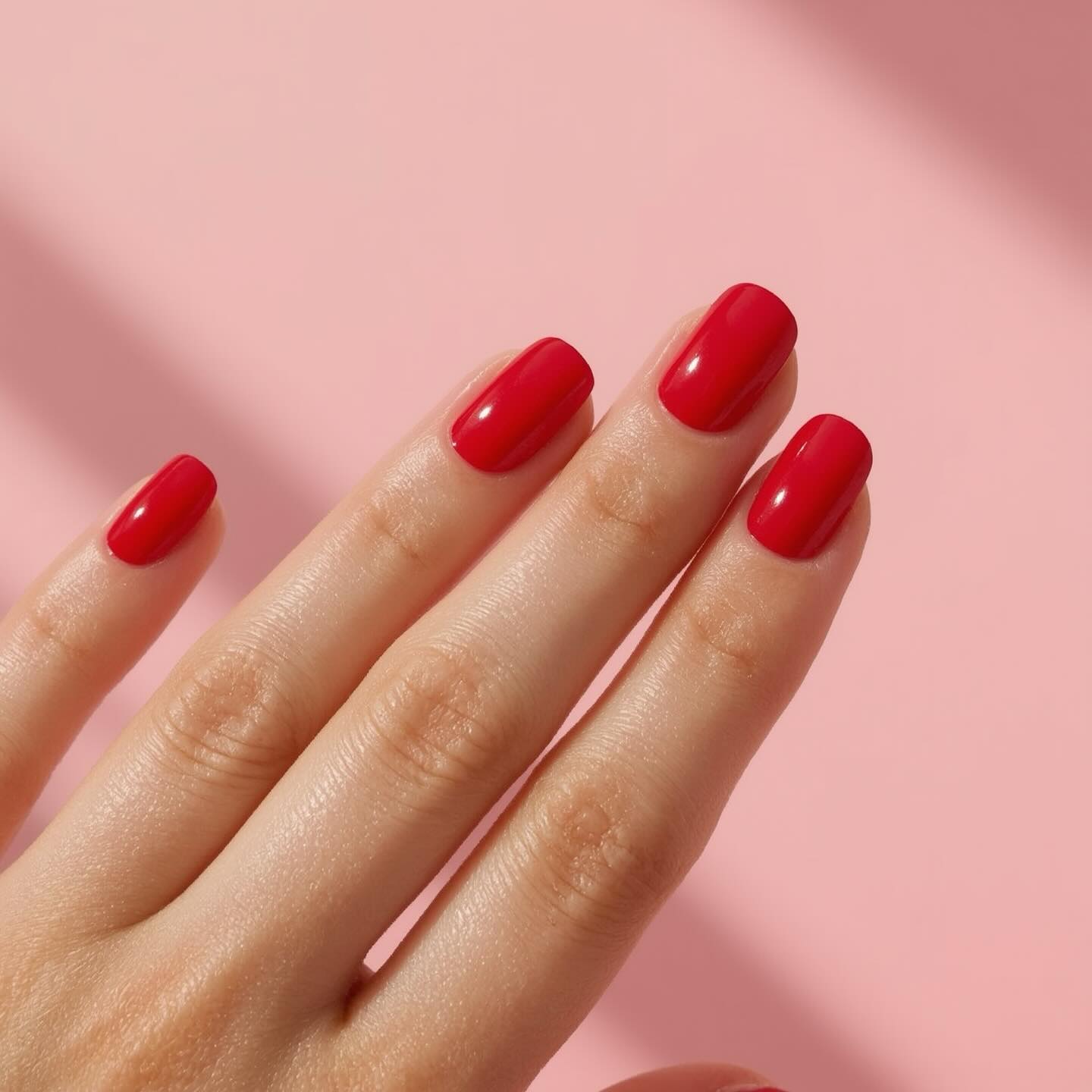
If your nail polish will not last and you find it chipping at the tip soon after painting, start by looking at how you paint your nails and what happens right afterwards, because that is where the causes you can change yourself lie: a trace of hand cream or oil on the nail plate, a missing base coat, layers that are too thick, an open edge at the tip of the nail, or water reaching the polish before it is dry. Sometimes the reason is the nail itself, when it is thin and peels or splits at the tip. Even if you do everything right, though, regular nail polish will not last as long as gel, which hardens under a lamp.
Cream and oil on the nail plate
Nail oil and hand cream are part of looking after your nails, but on the nail plate they get in the way if you paint over them afterwards. On the trade site NailKnowledge, Doug Schoon explains in an article about artificial nails that too much moisture and oil on the surface can stop a coating from adhering to the nail (NailKnowledge on oil and adhesion). In a dermatological review of nail cosmetics, too, the moisturising cream used during the manicure is cleaned off the nail plate again before the nail is considered ready for polish (Madnani and Khan, 2012).
So do not put cream on your hands just before painting your nails; wash them with soap instead, dry them well and wait until the polish is dry before you use oil and cream again. Any old polish should be completely off first, because the same review advises against layering new nail polish over the old without removing it beforehand.
Do not skip the base coat and top coat
The base coat is the first, clear layer, and according to Madnani and Khan it adheres particularly well because of its higher resin content and protects the nail plate from staining. They describe the ideal sequence as three layers of base coat, colour and top coat, with the top coat containing more nitrocellulose and less resin so that it protects the polish underneath from chipping. So when you paint your nails at home, do not leave out either of the two clear layers, even if the colour on its own already covers well.
Thick layers dry more slowly
Regular nail polish is a polymer dissolved in a solvent, and as it dries the solvent evaporates while the polymer hardens, as Janelle Nassim and Kristina Liu explain in an article for Harvard Health (Harvard Health on nail polish). The thicker a layer is, the more solvent has to evaporate from it, and until that has happened the polish stays soft and is easily dented or pushed out of place.
It is better, then, to apply the colour in two thin coats than in one thick one, and to give each coat time before the next goes on. The review by Madnani and Khan allows ten minutes between layers.
The open edge at the tip of the nail
In everyday life the tip of your nail is constantly knocking against something, when you type just as much as when you open a package, which is why polish often chips at the front edge first. To stop nail polish chipping there so quickly, finish each coat by running the brush once horizontally along the free edge, so that the polish wraps around the edge instead of leaving it open.
A smooth edge that nothing catches on matters just as much, and the American Academy of Dermatology (AAD), the US professional association for dermatologists, also advises keeping your nails shaped and free of snags with a file (the AAD's tips for healthy nails). The article How to file short nails explains how to do this on short nails.
Water and housework straight after painting
Regular polish has to dry on its own, which according to Cleveland Clinic can take more than half an hour depending on the brand and type of polish, while gel, once it has hardened under the lamp, cannot smudge or chip the moment you walk out of the door (Cleveland Clinic on gel polish). So paint your nails only once the washing-up and cleaning are done, and give the polish time afterwards before your hands go into water again.
Gloves are worth wearing later on as well, because according to the AAD too much water can weaken your nails so that they split, peel or break, which is why it advises wearing gloves when cleaning and washing up and moisturising your hands after washing them.
When the nail itself is thin and splits
When nail polish does not last on natural nails, the cause can also be the nail itself, because the polish sits on the top layer of the nail, and if that layer peels or splits at the tip, the polish comes away with it at that spot. On its page about gel manicures, the AAD advises applying a moisturising product such as petroleum jelly to your nails and cuticles several times a day between polishes, because this reduces brittleness and helps keep the nails from chipping (the AAD on gel manicures).
In an article from Cleveland Clinic, Dr Rosemary Keskinen recommends a formaldehyde-free clear polish for brittle nails that you can wear for a week, because a colour that chips has to be replaced, and that dries the nail out (Cleveland Clinic on brittle nails).
If a nail changes colour or lifts off the nail bed, or if the skin around the nail is red, swollen or painful or there is pus, do not paint over it but have it looked at by a dermatologist. The AAD also advises seeing a dermatologist if your nails change, swell or hurt, because these can be signs of serious nail problems.
How long a manicure with polish lasts and what gel does differently
There is no fixed number of days for regular nail polish, because it depends on your nail, the polish and your daily routine, and in their review Madnani and Khan recommend wearing nail polish for only a few days and then taking it off with an acetone-free remover. Gel, on the other hand, hardens under a UV or LED lamp in 60 to 90 seconds and should last two to three weeks according to Cleveland Clinic, and a dermatological review from 2024 puts the wide popularity of gel polish down to it lasting longer than regular nail polish (Wang and Lipner, 2024).
If nail polish does not last long on your nails, gel is still not automatically the better choice, because according to Harvard Health regular polish comes off quickly and easily with nail polish remover, while removing gel polish can damage the nails. The AAD advises considering regular nail polish instead of gel polish, especially if you keep having problems with your nails. Since most nail polish removers dry out the nails, according to the AAD, it is a good idea to moisturise your nails after taking the polish off (the AAD on manicure and pedicure safety).
Nail polish at Anni Nails in Meidling, Vienna
At Anni Nails the service is called "Nail Polish": regular nail polish is applied in the colour of your choice, which takes about 20 minutes and costs €10. For filing and caring for your nails there is "Manicure (File / Classic)", a classic manicure that takes about 50 minutes and costs €40.
Anastasia has been doing manicures for more than ten years and works with short nails and without aggressive techniques, and every treatment includes a personal consultation on caring for your nails and the skin on your hands. If you have any allergies, skin conditions or health concerns, please mention them before the treatment.
The studio is at Schönbrunner Straße 253, 1120 Vienna, and is open from 9 am to 8 pm Monday to Saturday and on Sundays on request. All treatments and their prices are listed under Services and prices, and you can find a free slot online under Book an appointment.


