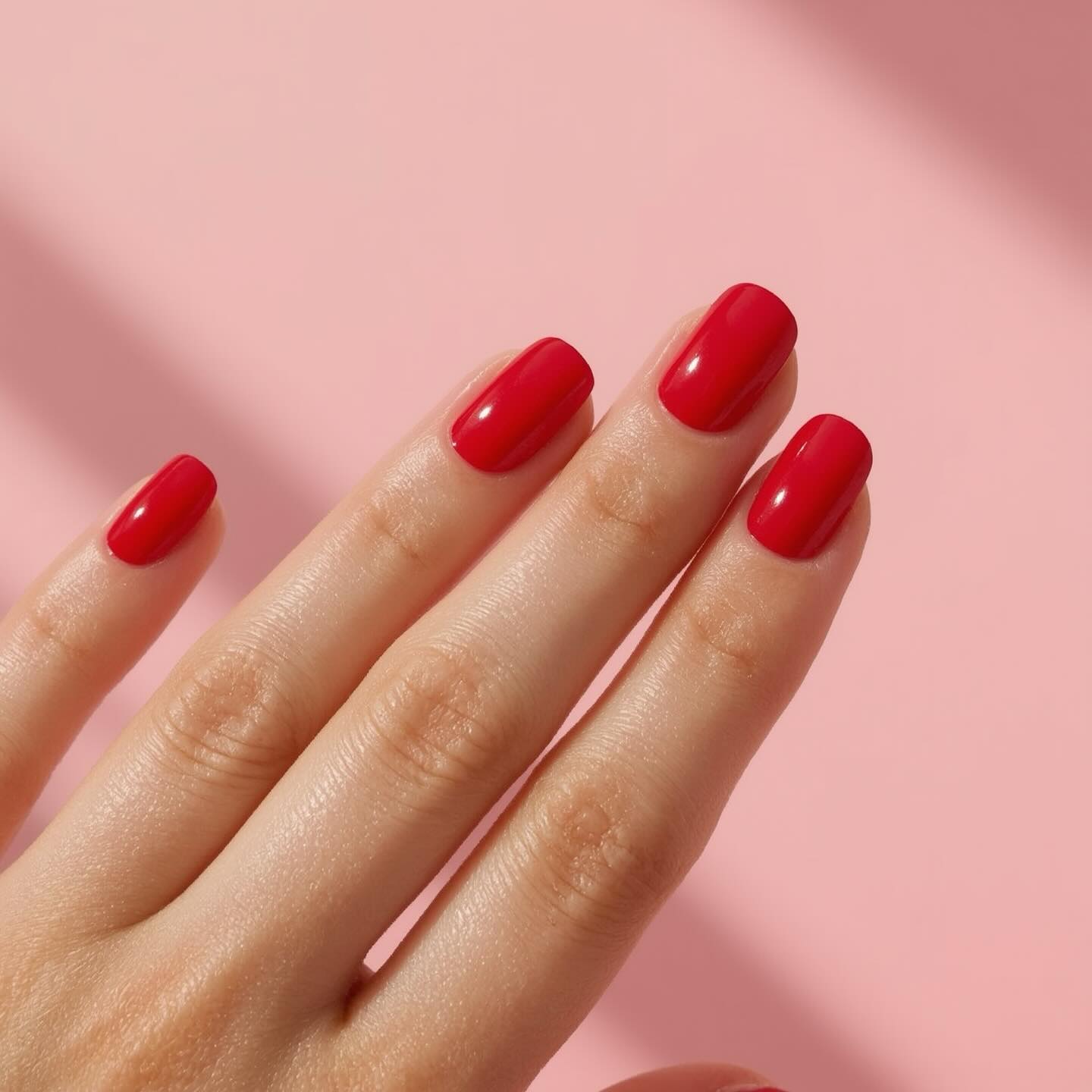
How to file short nails: which file, which shape and which direction

To file short nails properly, you need a fine file that is not made of metal and a shape that follows your fingertip, with the corners slightly rounded. Always file in the same direction, because according to the American Academy of Dermatology (AAD), the professional association for dermatologists in the United States, filing back and forth can weaken your nails. If the edge catches anywhere, file that spot smooth straight away instead of pulling at it or biting it off. If a nail hurts, the skin around it swells or the nail lifts off the nail bed, it should be looked at by a doctor.
Which file is right for natural nails
You do not need any special equipment to file your natural nails properly, because the AAD names a nail file or an emery board for smoothing the edges and rounding them off (the AAD on how to trim your nails). The Canadian Dermatology Association (CDA), the professional association for dermatologists in Canada, is a little more specific on its page about brittle nails, where it advises smoothing ragged nails with a file that is not made of metal (the CDA on brittle nails).
Emery boards and glass files, for example, are not made of metal. Emery boards often have a coarser side and a finer side, and some have the grit printed on them as a number, where a higher number means a finer file. For short natural nails the finer side is enough, because only a little needs to come off at the edge and a coarse file can quickly take off more than you meant to.
Which direction to file in
The AAD advises always smoothing rough edges in the same direction, because filing back and forth can weaken your nails. So instead of moving the file to and fro like a saw, place it at one side of the nail edge, draw it towards the centre with light pressure, lift it off and place it at the same side again. Then do the other half of the nail the same way, again from the outside towards the centre.
If you would also like to smooth the surface of the nail with a buffer, the CDA says to buff only in the direction the nail grows, that is from the base of the nail to the tip, so that the nail does not split any further.
Which shape suits short nails
On short nails your fingertip largely decides the shape, and the ones that wear best are a round shape that follows the curve of the fingertip and an almost straight tip with slightly rounded corners. The second matches what the AAD recommends for fingernails, which is to cut them almost straight across and round the corners slightly with a file, because this helps keep the nails strong and stops them from catching on things like clothing or furniture. A square tip with sharp corners, on the other hand, catches more easily. You can read how each shape looks on short nails in the article Short nails that look natural.
Another point in favour of short nails comes from the dermatologist Rosemary Keskinen, who explains in a Cleveland Clinic article that if you grow your nails longer and regularly use nail cosmetics, you are more likely to get nails that split, crack or break than if you keep them short (Cleveland Clinic on brittle nails).
Step by step: how to file and shape short nails
- If your nails are clearly too long, first cut them almost straight across with nail clippers or nail scissors, and according to the AAD the best time to do this is right after a shower or bath, when the nails are softer. If only a little needs to come off, the file alone is enough.
- For an almost straight tip, hold the file across your finger, file the tip straight and then round off each corner slightly with a few short strokes. For a round shape, guide the file from each side towards the centre in a gentle curve.
- File only the free edge, that is the white part at the tip, and not down into the sides of the nail, so that the nail does not become narrower at the sides.
- Every so often, look at your nails from above and from the front and compare your fingers with each other, so that the shape comes out the same on all ten.
- When you have finished, run the fingertip of your other hand over the edge to feel whether anything is still rough.
- Then moisturise your nails, which according to the AAD helps keep them flexible and matters especially when the air is dry, because dry nails split more easily.
Smoothing a torn edge instead of pulling it off
If a nail catches on your tights or your sweater, the edge is rough or torn at that spot. Instead of pulling the loose piece off or biting it off, file the spot smooth straight away with the fine side of the file, using light strokes in one direction until the edge feels smooth under your fingertip. This is in line with the AAD's advice to keep nails shaped and free of snags by filing them with an emery board, and the AAD advises against biting your nails because it can damage them (the AAD's tips for healthy nails). If the nail has lost some length where it tore, even out the other nails to match afterwards.
If your nails keep breaking, Keskinen advises in the same Cleveland Clinic article clipping or filing them shorter for a while. The AAD also recommends wearing gloves when you clean or wash the dishes, because too much water can weaken the nails so that they split or break.
If what is hanging loose is not the nail but a piece of skin at the edge of the nail, that is a hangnail, and instead of filing it you cut it off with clean nail clippers, as described in the article Torn cuticles and hangnails.
When a torn nail should be seen by a doctor
If a nail hurts, the skin around it turns red or swollen, or the nail lifts off the nail bed, stop working on it with the file and have it looked at by a dermatologist. According to the AAD, a dermatologist should examine any nail that is lifting, and redness and swelling around a nail can be a sign of an infection (the AAD on nail changes a dermatologist should examine). If you have diabetes or poor circulation, the AAD says it is especially important to have nail problems treated.
File manicure at Anni Nails in Meidling
If you would rather not file the shape yourself, Anni Nails offers "Manicure (File / Classic)", a classic manicure with files and nail care, which takes about 50 minutes and costs €40. Anastasia has been doing manicures for more than ten years, and at Anni Nails she works only with short nails, avoiding aggressive techniques and treating the nail plate gently. Every treatment includes a personal consultation on caring for your nails and hands, in which you can also ask how to file your nails yourself until your next appointment. The instruments are sterilised, and single-use materials are used for every treatment.
The studio is at Schönbrunner Straße 253, 1120 Vienna, and is open from 9 am to 8 pm Monday to Saturday and on Sundays on request. All treatments and their prices are listed under Services and prices, and you can make an appointment online under Book an appointment.