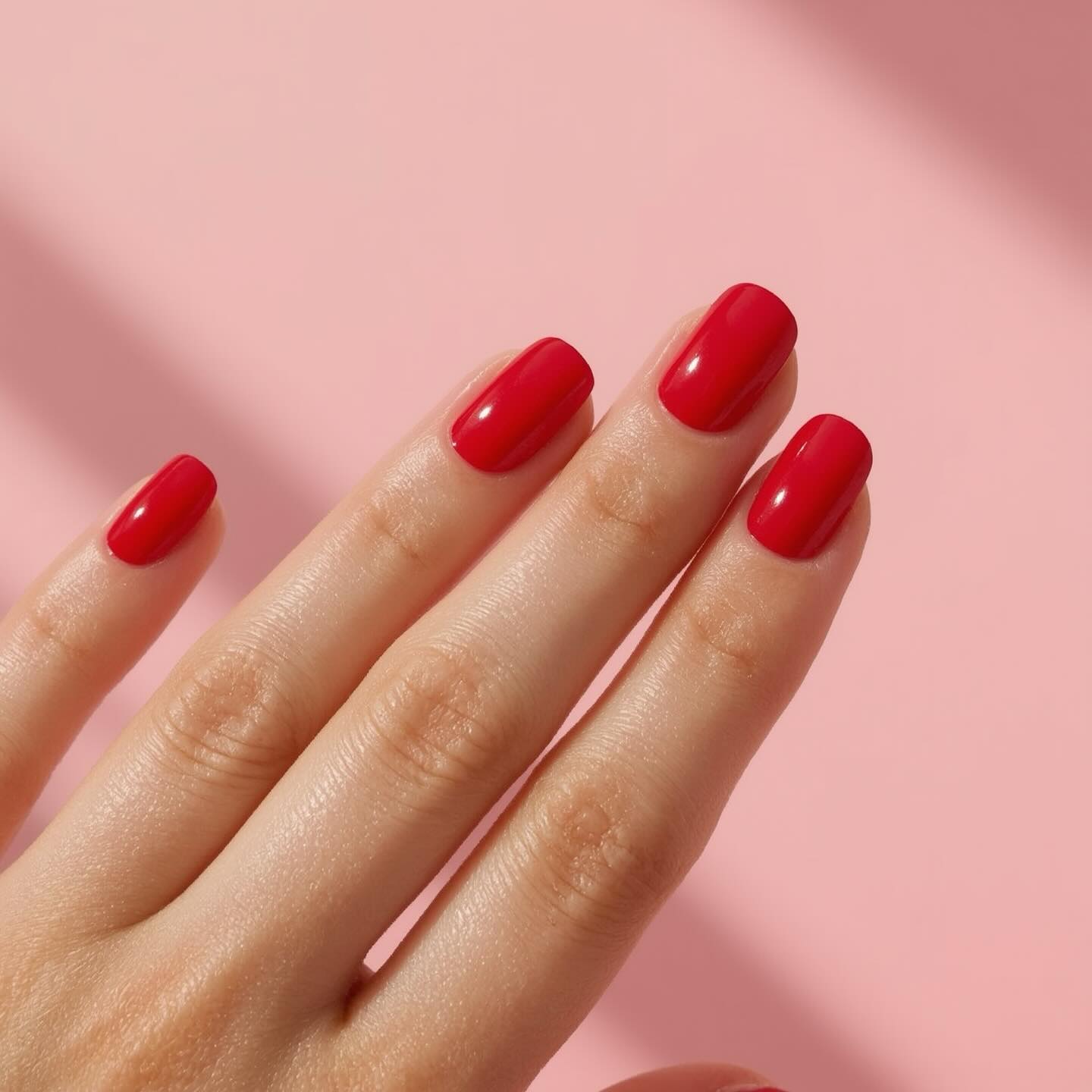
Russian, Japanese, file or classic manicure in Vienna: the differences

If you are looking for a Russian manicure in Vienna, it helps to know what a Russian manicure actually is: a manicure without a water bath, in which the work on the nail and cuticle starts straight away with an electric drill. In a classic manicure, by contrast, the fingers are soaked in warm water before the cuticle is pushed back and often trimmed with scissors or nippers. A Japanese manicure treats the natural nail without polish by working a paste and a powder into it, and in a file manicure fine files do the work on the cuticle. Where these types differ most is in what happens to the cuticle, and that is exactly what dermatologists' warning about the Russian manicure refers to. At Anni Nails in Meidling the manicure is called "Manicure (File / Classic)", and a Japanese manicure is not on the list of services.
What a Russian manicure is
The American Academy of Dermatology (AAD), the professional association for dermatologists in the United States, described the Russian manicure in October 2024 in a news release on skin care trends from social media (the AAD's news release). In it, Dr. Samantha Karlin explains that the Russian manicure, also known as a dry manicure, skips the usual step of soaking the nails, and that an electric file is used on the nail and cuticle right away instead. The aim is to remove the skin around the nail and the cuticle so that the nails look longer, and to place the polish under the cuticle so that the manicure lasts longer.
In Russian usage, manicures done with a drill are divided more finely. In a machine manicure the cuticle is removed with drill bits, while in a combined manicure a soft bit first lifts the cuticle before it is cut off with scissors or nippers, without the fingers being soaked beforehand.
How harmful a Russian manicure can be
In the same news release Dr. Karlin advises against this technique, because the cuticle acts as a protective barrier and is not designed to be breached. According to Dr. Karlin, removing it puts you at risk of infection from bacteria and fungi, and it is after Russian manicures in particular that dermatologists see patients with paronychia, in German usually called Nagelbettentzündung, an infection in which the skin around the nail becomes inflamed, painful and discoloured.
The AAD sees a risk, however, even when the cuticle is cut or pushed back, because either can lead to a serious infection, whether you do it yourself or your nail technician does (the AAD on dip powder manicures). In its advice on manicures and pedicures, the AAD recommends never cutting your cuticles or pushing them back forcefully, to help prevent infection, and if you must push them back, doing so only gently after a shower or bath (the AAD's advice on manicure and pedicure safety).
So before a manicure, feel free to ask whether a drill will be used and what for, and to say straight away if you want your cuticles neither cut nor drilled away. It is also fair to ask how the instruments are cleaned, and the AAD explicitly encourages this in the same advice.
Russian and classic manicure: the difference
In a classic manicure, often called a wet manicure, the nails are filed first and then the fingers go into warm water for a few minutes so that the cuticle softens. After that it is pushed back with a pusher and often cut off with scissors or nippers. The difference from a Russian manicure therefore lies in the water and the tools, while the cuticle may be removed in both, which is why the AAD's advice applies to both.
In Russian usage, a manicure without cutting is also called a European manicure: the cuticle is pushed back with a wooden stick, either after a warm water bath or completely dry. Since this also involves pushing, the AAD's advice to do it only gently applies here as well.
Japanese manicure: shine from a paste and powder instead of polish
In a Japanese manicure the nails are first trimmed and shaped with a file. A special paste is then worked into the nail, its particles settling into the unevenness of the nail surface, and finally a powder is buffed in that makes the nail shine as if you were wearing clear polish, although no polish has been applied at all.
What to expect from a Japanese manicure
The result is a natural shine without colour, so if you would like red or pink on your nails, a Japanese manicure is not the right choice for you. Some descriptions claim that it stimulates circulation and nail growth, but they give no evidence for this, which is why it is wise to be careful with promises like these.
Because the treatment involves buffing, it is also worth looking at the tips for healthy nails that Loyola University Health System in the United States published in 2014: according to Dr. Rebecca Tung of Loyola's dermatology department, a buffing board can smooth out uneven ridges, but buffing too often can make the nail thinner and weaker (Loyola University Health System's news release). If your nails have already become thin after gel, that is a reason to buff sparingly until the thin areas have grown out, and you can read how to care for your nails until then in the article on gel nail removal.
File manicure: caring for the cuticle with files
In a file manicure the nails and cuticles are worked on with hand files: the file shapes the nails and smooths the cuticle instead of cutting it off or drilling it away, and afterwards the cuticles and the skin are cared for. How it works step by step and who it suits is explained in the article on the file manicure.
When to see a dermatologist
According to the AAD, redness and swelling around a nail can be a sign of an infection, which, when diagnosed early, can often be treated with soaks and antibiotics (the AAD on nail changes). So after a manicure, do not wait to see whether it passes, but go to a dermatologist if
- the skin around a nail is red and swollen,
- the area hurts or pus comes out,
- the skin at the nail or the nail itself changes colour,
- the nail lifts off the nail bed.
If you have diabetes or poor circulation, the AAD says it is especially important to have any nail problem treated (the AAD's tips for healthy nails).
Which manicure you get at Anni Nails in Meidling
At Anni Nails, Schönbrunner Straße 253, 1120 Vienna, the manicure is called "Manicure (File / Classic)" and is described on the website as a classic manicure with files and nail care, which takes about 50 minutes and costs €40. Unlike in a wet manicure with scissors or nippers, the cuticle is not cut but gently smoothed and shaped, and a small, natural rim is kept because it protects the nail and the skin.
Anastasia has been doing manicures for more than ten years, works with short nails and without aggressive techniques, and treats the nail plate with care. Every treatment comes with sterilised instruments, single-use materials and a personal consultation on caring for your nails and hands.
Anni Nails does not offer a Japanese manicure, and you will not find a treatment called Russian manicure on the list of services either. If you would like colour, add "Nail Polish" to your manicure, a classic polish in the colour of your choice that takes about 20 minutes and costs €10. You can find a free slot online under Book an appointment, and all treatments with their prices under Services and prices.